
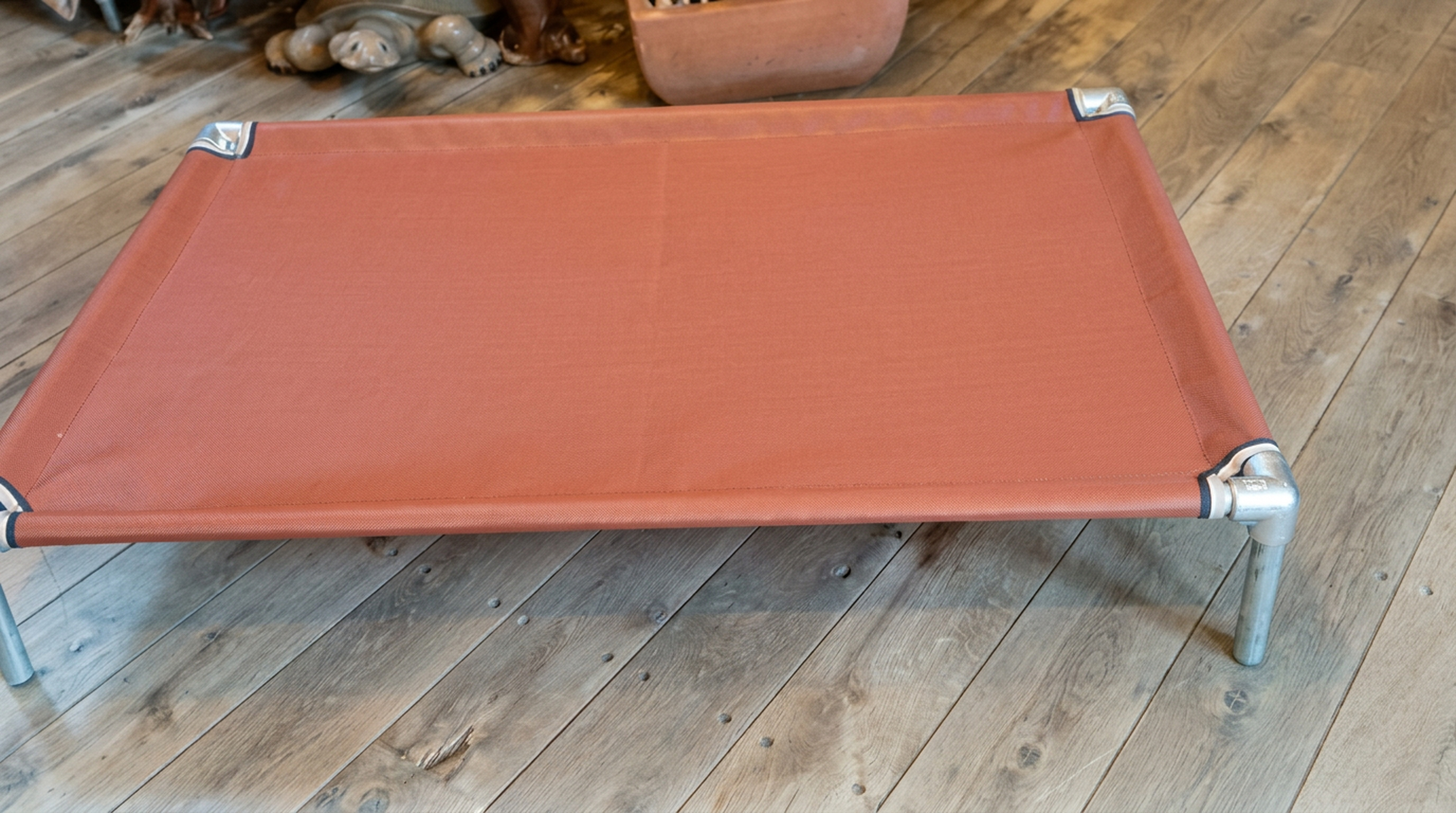
Raised Dog Beds in Ireland: The Complete Buyer's Guide (2026)
5,400 people a month search 'raised dog bed'. Here's why elevated dog beds beat pillow beds for Irish weather, older joints, and dogs that overheat — and what to look for before you buy.
5,400 people a month in the UK search "raised dog bed". Another 1,300 search "elevated dog bed", 1,900 search "outdoor dog bed" and 390 add "raised dog beds for large dogs". In Ireland the numbers are smaller but the reason is the same: pillow beds soak up damp, flatten in six months, and sit cold dogs on cold tiles. A raised dog bed fixes all three at once.
Why a raised dog bed beats a pillow bed in Ireland
Irish floors are cold nine months a year. A pillow bed puts 4cm of foam between your dog and a concrete or tile floor — foam that collapses to 1cm within a season. A raised dog bed lifts the dog 20–30cm off the ground on a galvanised steel frame, which means air flow underneath, no cold conduction from the floor, and no damp wicking up from a stone kitchen.
Air flow keeps hot dogs cool
Thick-coated breeds — collies, huskies, GSDs, retrievers — overheat on foam. An elevated dog bed is essentially a hammock: the dog's body heat vents downwards instead of pooling in the padding.
No damp, no smell, no mould
Pillow beds absorb rain, drool and mud. A tensioned PVC canvas surface on a raised frame doesn't. You mop it, it dries in minutes, and it never develops that wet-dog-bed smell that ends with a new bed on the shopping list.
What to look for in a raised dog bed
- Galvanised steel frame (not powder-coated)
Powder coat chips; chips rust; rust spreads. Galvanised steel is treated through and survives a decade in an Irish shed.
- Tensioned canvas surface, not mesh
Mesh camping cots rip once and the dog's foot goes through. Tensioned marine-grade PVC canvas has nothing for a chewer to get a tooth into.
- Rubber feet
Stops the frame skating on tiles and protects wooden floors.
- Size chosen to weight, not to length
A raised bed should give the dog 10cm clearance on every side when curled. If in doubt, size up.
Are raised dog beds good for older dogs?
Yes — and this is where they earn their keep. Arthritic and post-surgery dogs struggle to get down onto a floor-level bed and struggle even more to get up again. A raised dog bed at 20–30cm meets them halfway. The firm tensioned surface also supports joints better than a flattened foam pillow (see our orthopaedic dog beds guide).
Raised dog beds for large dogs (and Wolfhounds)
The 390-a-month searchers for "raised dog beds for large dogs" all hit the same wall: most retailers stop at 100cm. Great Danes, Bernese and Irish Wolfhounds need 117cm+, and they need six legs, not four, or the frame flexes. KosieCare's Giant and Wolfhound sizes are built specifically for this — the Giant has six reinforced legs to spread the load.
Common questions about raised dog beds
Do dogs like raised beds?
Overwhelmingly yes, once they've had a night on one. The elevation gives them a vantage point (dogs are den animals with an eye on the door) and the firm surface stops the sinking feeling that shallow foam gives. The 20/mo UK searchers for "do dogs like raised beds" almost universally end up as converts.
Are raised dog beds better?
For Irish weather, older dogs, chewers, outdoor dogs, and dogs with allergies — yes. For a small dog that likes to burrow into blankets, a pillow bed still wins. Match the bed to the dog, not the trend.
How to keep a dog on a raised bed
Put the raised dog bed where the dog already sleeps. Don't move their existing bed — add the new one alongside. Nine dogs in ten switch within a week because the raised bed is genuinely more comfortable.
Where to start
If you're new to raised dog beds, size to your dog first and pick the frame material second. All KosieCare beds are hand-made in Ireland from galvanised steel with a hypoallergenic PVC canvas surface — see the full shop or browse by local delivery town.
Sources
UK search volumes from Semrush (UK database, June 2026).